- The Science Content Lab
- Posts
- Beyond the Basics: Communicating Cutting-Edge Research to Expert Audiences
Beyond the Basics: Communicating Cutting-Edge Research to Expert Audiences
Why frontier science fails, or succeeds, based on how it's explained to those who already know the basics

Suchitha Champak
February 02, 2026
Welcome, reader!
Why “Advanced” Audiences Are the Hardest to Reach
In 2023, a meta-research analysis published in Social Science and Medicine showed that even highly cited, methodologically sound randomized controlled trials are frequently misinterpreted by scientific peers when key assumptions and limitations are not clearly communicated (Soc Sci Med). So, expertise, it turns out, does not guarantee shared understanding.
If we apply the same principle to expert audiences who are already familiar with how a piece of technology works, it matters more to convey why it matters now, where it breaks, and how it meaningfully advances the state of the art. Over-simplification erodes credibility; at the same time, excessive technical density obscures insight. In biotech, medtech, and translational research, communication failure at this level slows down adoption, distorts peer evaluation, or can even undermine regulatory and clinical trust.
This edition explores how to translate frontier science into narratives that respect expert intelligence while sharpening impact. We examine evidence-backed strategies for advanced scientific storytelling, showcase real-world examples, and offer practical tools for communicating novelty to experts without noise.
Featured Insight: From Information Density to Insight Density
A common misconception in expert communication is that more data equals more rigor. However, it appears that expert readers prioritize interpretive framing over raw information volume. A ThoughtCo summary of expert reading behavior captures this dynamic well: experts don’t skim for volume, they read slowly and iteratively, holding ambiguity, questioning assumptions, and using later context to refine understanding. In other words, experts extract value not from more information, but from clearer framing of what matters, what’s uncertain, and how new ideas reposition existing knowledge (ThoughtCo).
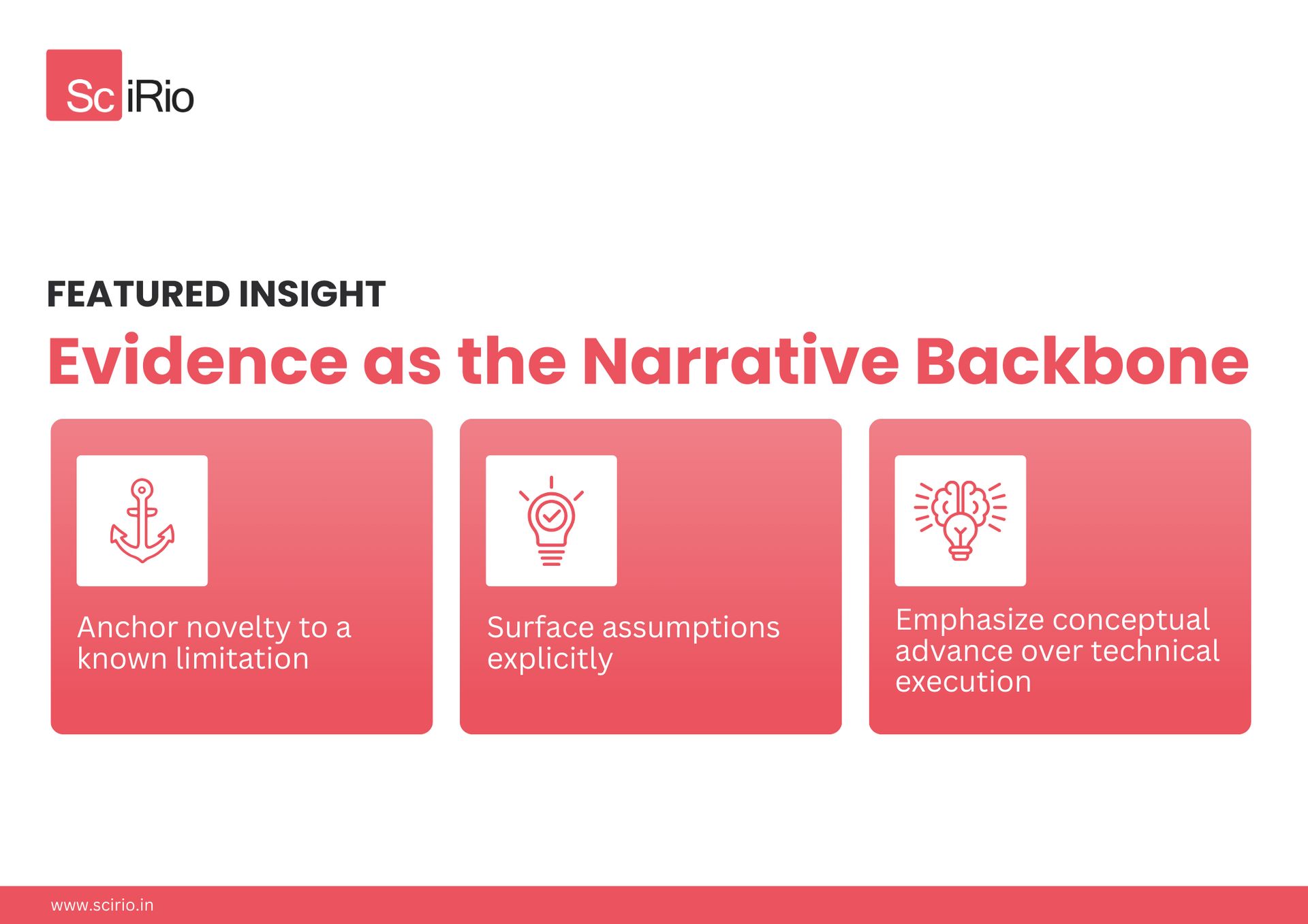
So, high-performing scientific narratives for expert audiences should consistently do three things:
Anchor novelty to a known limitation — clearly stating what prior approaches could not resolve.
Surface assumptions explicitly — including model boundaries, data constraints, and unresolved uncertainties.
Emphasize conceptual advance over technical execution — highlighting why the work changes how a problem is understood.
Innovation Showcase
The Allen Institute for AI’s work on explainable biomedical language models is a strong example of expert-level communication done well. In their open-access publications on SciBERT and later domain-specific models, the authors focus less on model architecture novelty and more on evaluation context, failure modes, and domain transferability — the exact questions expert readers care about (arXiv).
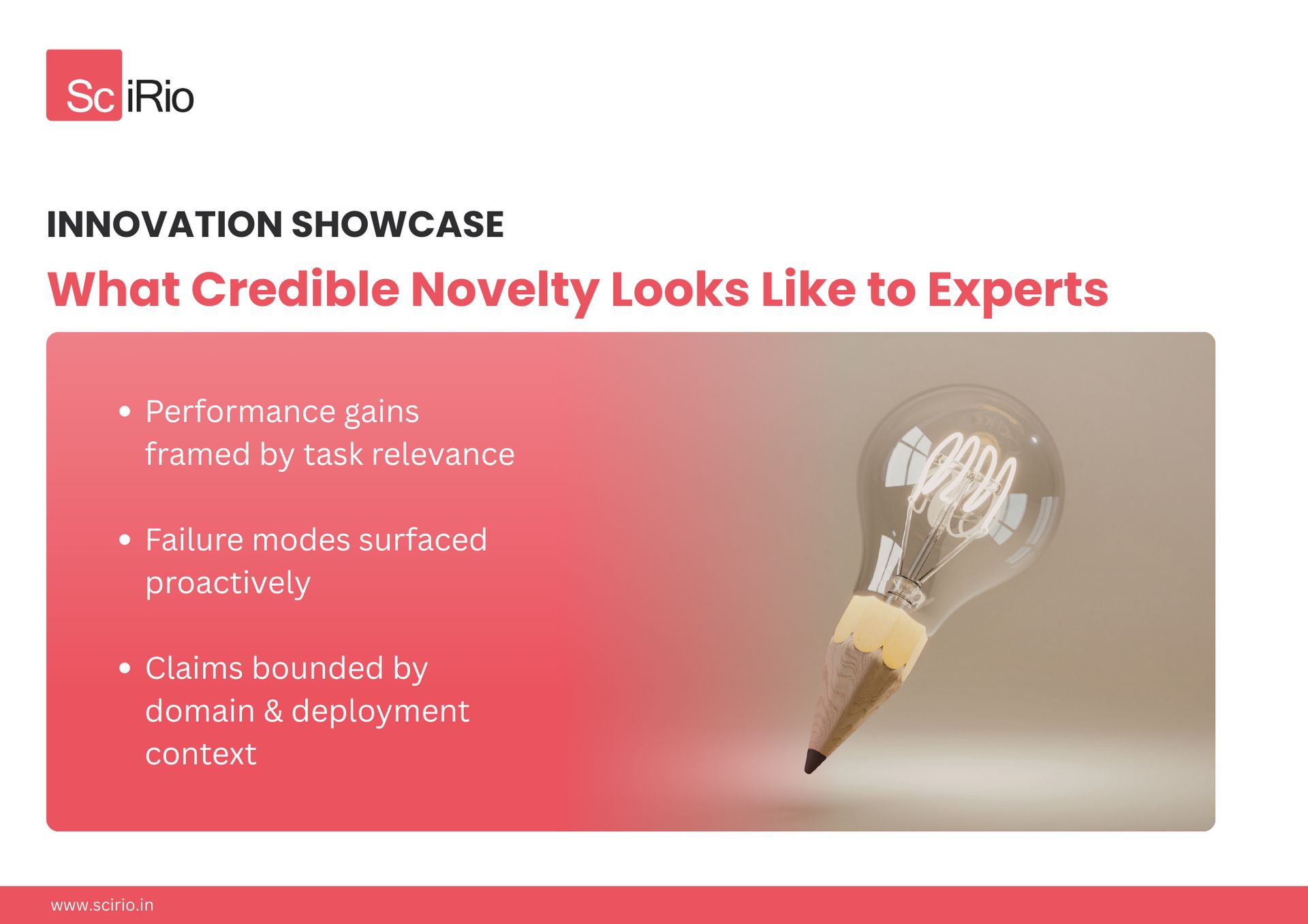
Rather than claiming broad superiority, the communication emphasizes:
Where performance gains are statistically meaningful
Where general models still outperform domain-specific ones
What remains unresolved for clinical or regulatory use
This restraint strengthens credibility and accelerates informed adoption.

Practical Tools: Communicating Technical Depth Without Dilution
When writing for technical audiences outside academia, like engineers, product teams, or applied researchers, clarity comes less from formal reporting standards and more from how insights are structured and evidenced. These tools support that kind of expert communication.
1. “Problem–Breakthrough–Tradeoff” Content Template
Used widely in high-performing technical blogs (e.g., Stripe, AWS, DeepMind), this structure foregrounds application relevance:
Problem: Where existing systems or approaches fall short in practice
Breakthrough: What meaningfully changes with this approach
Tradeoff: Performance limits, edge cases, or operational costs
This mirrors how technical buyers and practitioners evaluate credibility.
2. GitHub Issues & Repos as Credibility Anchors
Linking to real-world implementations, benchmarks, or issue discussions (even selectively) signals engineering maturity and transparency, sometimes more persuasively than polished claims alone.
3. Architecture & Workflow Diagrams (Not Feature Lists)
Tools like BioRender or Excalidraw help communicate system behavior, data flow, and constraints visually. This reduces explanation overhead while preserving technical depth.
4. “Known Limitations” Callout Boxes
Explicitly stating where an approach underperforms or remains untested builds trust with technical readers and mirrors how senior engineers and applied scientists assess tools in real-world contexts.

From the Field: How Senior Scientists Read
A case study published in the International Journal of Science Education revealed that in the biological sciences, experts typically skim methods but read introductions, discussion sections, and even figures — specifically looking for positioning, limitations, and interpretive clarity (International Journal of Science Education).
One recurring insight: expert readers are less tolerant of rhetorical inflation than non-specialists. Claims perceived as overstated trigger skepticism that can overshadow genuine innovation.
Behind the Scenes: Creating Content for Specialized Audiences
In SciRio’s work for Axiflow Biotech, the target audience is a specialized cohort with core competencies in in vitro diagnostic assays. Our content strategy for such an audience makes sure that the tone is not preachy, but one that is replete with technical details that can make the company and its products stand out.
There are several aspects we consider while putting together content for Axiflow’s audience:
Concise, technical copy: The audience is already informed; they just need the specifics to understand why the products are one step ahead in the existing market.
Creatives with a direct message: No abstract or generic designs, we portray the products and technology upfront.
Consistent sync with client’s expertise: Every content piece requires a different depth, and should reflect the client’s in-house unique expertise, which can be imbibed through several iterations, according to what the piece demands.
The research put into understanding the client’s USPs and technical uniqueness ultimately guides the content strategy, which can best connect with technically specialized audiences.
Community Corner: How Do You Signal Novelty Without Hype?
When communicating to expert audiences, what signals make you trust that a piece of research is genuinely advancing the field?
Join the discussion on SciRio’s LinkedIn.
Final Word: Respect the Expert, Earn the Trust
Advanced audiences don’t need simplification — they need precision, context, and intellectual honesty. The most effective frontier science communication doesn’t talk down or overwhelm; it invites peers into a clear, rigorous conversation about what has changed, why it matters, and what remains unknown.
Missed the last newsletter edition? Read it here.